On Thursday afternoon, millions of people around the world opened Outlook or Teams and found nothing there. A widespread Microsoft 365 outage took down email, chat, SharePoint and Copilot for businesses, schools and governments, and by Friday Microsoft was still reporting that it had not seen a sustained recovery.
According to Microsoft, this was not a cyber attack. A core process on its servers became overwhelmed, the servers stopped responding, and every time some were brought back they risked falling over again once traffic returned. In other words, one part of one system had a bad day, and a large slice of the working world stopped with it.
One platform, everything connected
When the centre fails, everything that depends on it goes down at once.
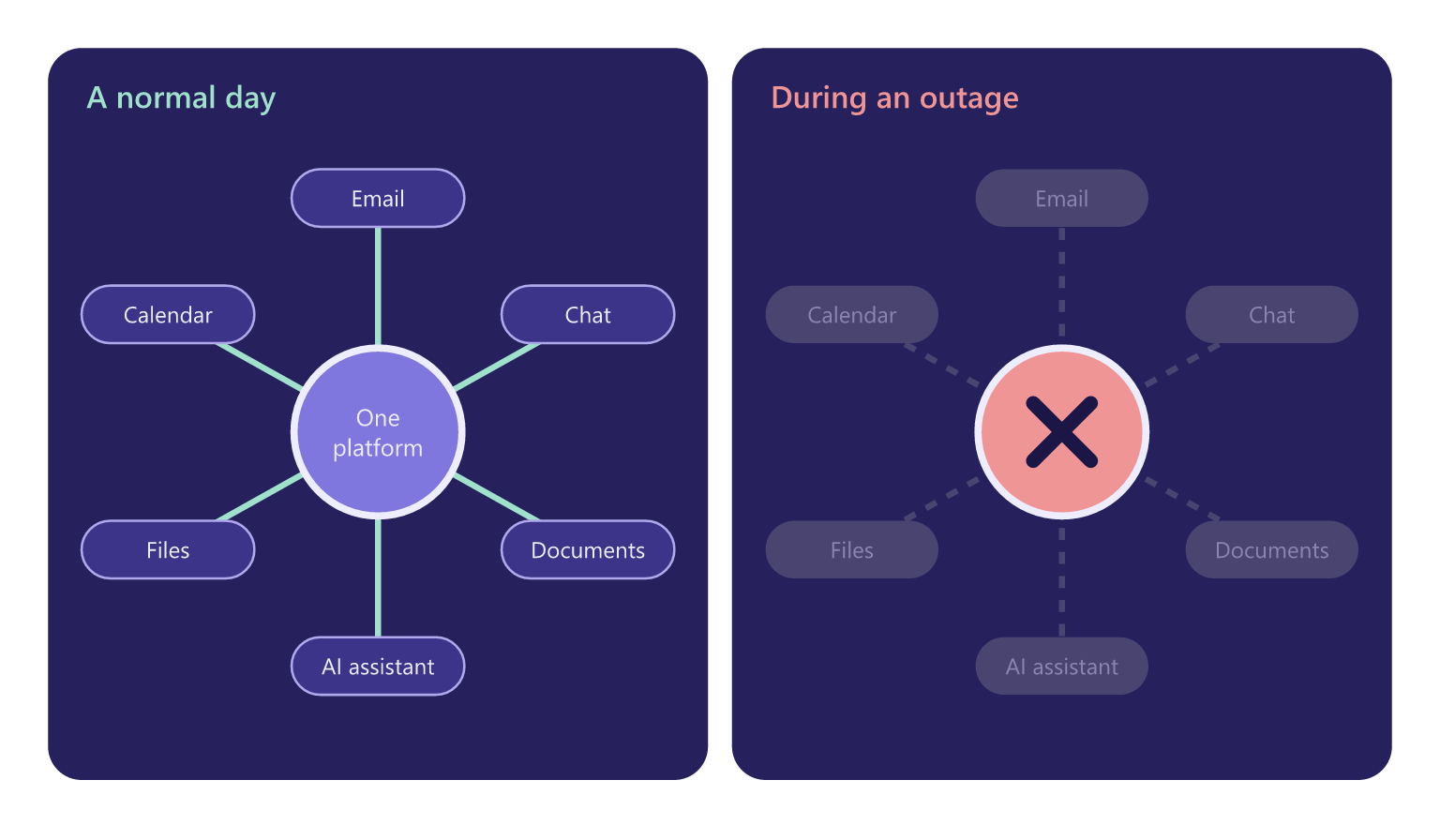
That is the part worth sitting with. Most of us do not think about the systems underneath our day until they disappear. We do not keep phone numbers, we do not print anything, and many teams have no way to talk to each other that does not run through the same provider as their email. When it goes, it all goes at once.
This is not a one-off, and it is not only a Microsoft problem. Every year brings another outage at a cloud provider, a payment network, an airline system or a security tool, and each one reaches further than the last because more of the world is plugged into the same handful of platforms. Hospitals, shops, banks, councils and one-person businesses now share the same weak points. The question is no longer whether this happens again, but how often, and in which industry next.
Security sits right in the middle of this. We trust these platforms with our emails, our customer details and our money, usually without knowing how they are protected or what the plan is when something fails. This week the cause was an overloaded process. Next time it could be an attacker, and the effect on the people relying on the system would look much the same.
Now add AI. Businesses are rushing to wire AI assistants into their email, documents, customer service and code. Copilot was one of the services that went down this week, and that is a small preview. As AI moves from a helpful extra to something that drafts the contracts, answers the customers and writes the software, an outage or a breach stops being an inconvenience and starts to stop the work itself.
AI also changes how systems are built and attacked. Code is being written faster than ever, and not all of it is properly checked. Attackers have the same tools, and they use them to find weaknesses at a scale that was not possible a few years ago. Systems are becoming more connected, more automated and harder for any one person to understand. That is exactly the mix that produces failures nobody saw coming.
I do not think anyone can honestly say where this leads. AI will bring real benefits, and it will also disrupt industries, jobs and the way we depend on technology in ways we cannot yet predict. What we can do is stop assuming everything will always be there, and start asking what happens if it is not.
Could your business cope with a bad day?
Four questions to ask before the next outage.
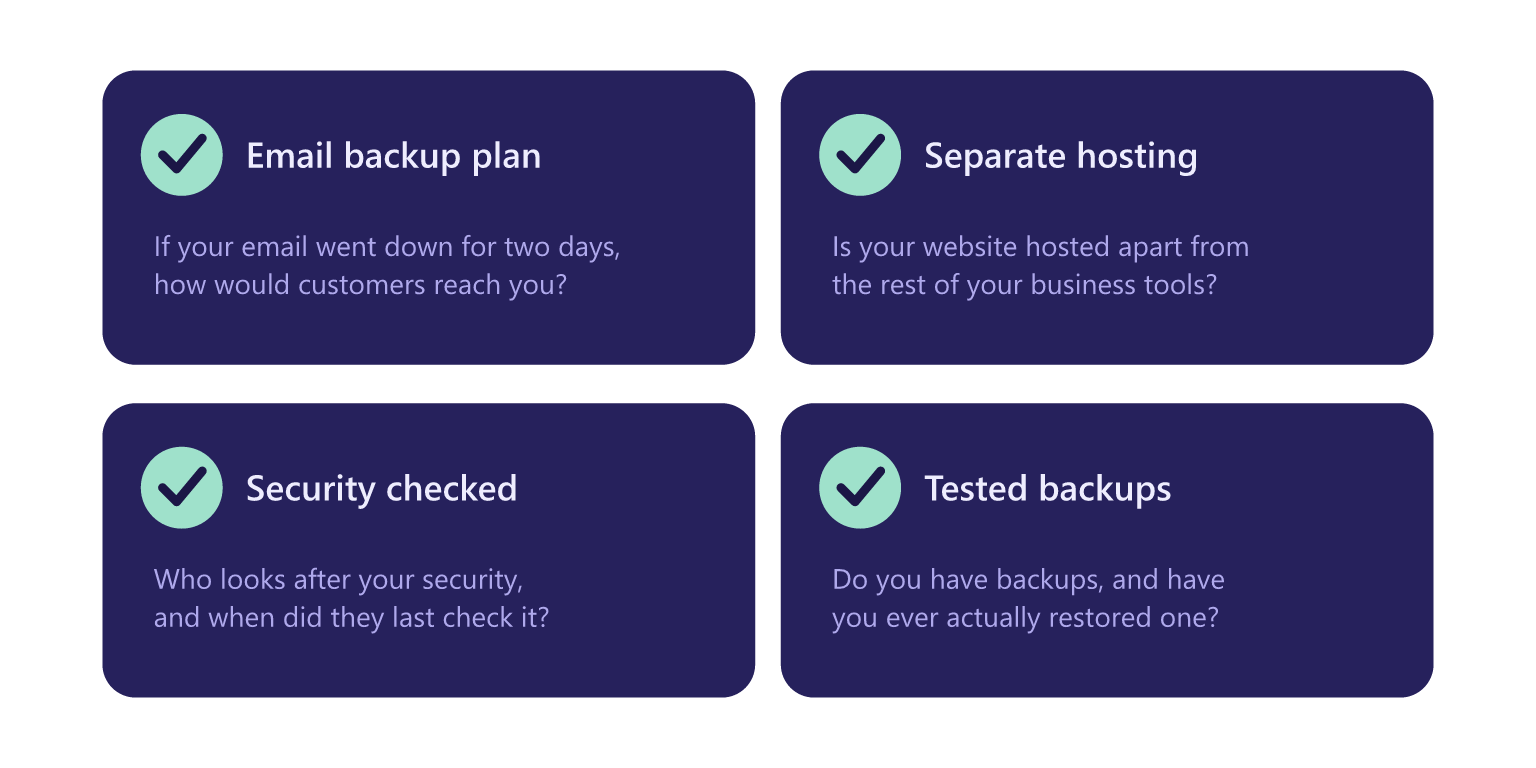
For a small business, that starts with a few simple questions. If your email went down for two days, how would customers reach you? Is your website hosted somewhere separate from the rest of your tools? Who looks after your security, and when did they last check it? Do you have backups you have actually tested?
If you would like a second pair of eyes on any of that, from how your site is hosted to how well it would cope with a bad day, I am happy to help. A little planning now is much cheaper than finding out the hard way.